
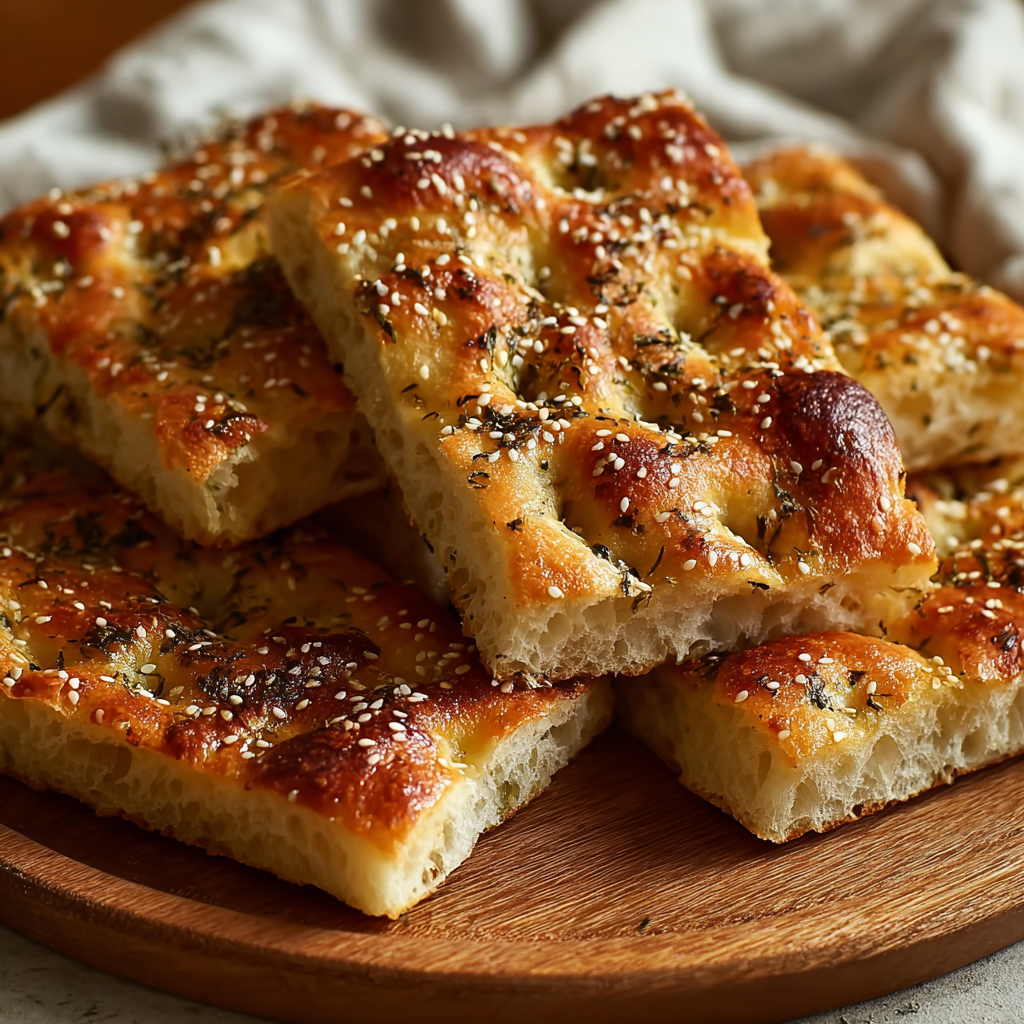
There’s something deeply satisfying about turning what you might toss away — leftover sourdough discard — into a golden, bubbly, olive-oil kissed focaccia that fills your home with the warm scent of fresh bread. This focaccia is rustic yet elegant: a crisp, bronzed crust gives way to a soft, airy interior, dotted with those signature nooks and crannies that trap olive oil and flavor. Each slice — warm and slightly chewy — whispers of tradition, patience, and good home baking.
Whether you bake it same-day or opt for a slow overnight ferment, this bread brings out the best of the discard’s subtle tang and the flour’s natural flavor. It’s a little indulgence that feels wholesome — great with soups or stews, perfect for sandwiches, or simply dipped into olive oil and herbs.
I love making this focaccia when I have a bit of extra sourdough discard: it feels like alchemy, transforming something ordinary into something beautiful and nourishing. The process — stretch-and-folds, gentle rising, and the final dimpled bake — slows me down similarly to kneading dough by hand; it’s meditative, satisfying, and deeply rooted in tradition.
Why You’ll Love This Recipe
- Waste-friendly and flavorful — turns leftover starter into a light, aromatic bread.
- Soft, airy crumb with crisp crust — perfect balance of chewy interior and golden exterior.
- Flexible timing — works as a same-day bake or benefits from overnight fermentation for deeper flavor.
- Simple ingredients — mostly pantry basics: flour, water, discard, salt, olive oil.
- Beginner-friendly — no kneading needed, simple folds and gentle handling do the work.
- Versatile — great on its own, as sandwich bread, with soups, or topped with herbs/toppings.
Ingredients
(Makes one large focaccia — about 12 servings / or 1 large sheet pan)
- 500 g bread flour (or all-purpose if that’s what you have)
- 450 g warm water (about 80–90 °F / 27–32 °C)
- 100 g sourdough discard (fresh or up to a few days old)
- 10 g kosher salt (about 2½ teaspoons)
- 6 tablespoons extra-virgin olive oil, divided (for dough + pan + topping)
- Optional for topping: fresh or dried herbs (rosemary, thyme, etc.), flaky sea salt, cherry tomatoes, olives, caramelized onions, or other favorite focaccia toppings
Instructions
- Mix dough
In a large bowl, combine the bread flour, warm water, sourdough discard, and salt. Stir until no dry flour remains — the dough will be wet and sticky. Cover and let rest for 15 minutes. - Stretch-and-fold
With wet hands (to prevent sticking), grab one edge of the dough, stretch it upward, and fold it over toward the center. Rotate the bowl 90°, and repeat — completing about 4 folds. Cover, rest 15 minutes, then repeat this stretch-and-fold process a total of 5–6 times, every 15 minutes. You will notice the dough becoming smoother and more elastic with each fold. - Bulk rise
Lightly oil a clean bowl with a tablespoon of olive oil. Transfer the dough to this bowl, coat the surface lightly with oil to prevent drying, cover, and let rise at room temperature until roughly doubled in size — usually around 4 hours (depending on room temperature). - Prepare the pan & shape
Coat a baking sheet or 9×13-inch (or similar) pan generously with 2 tablespoons olive oil (or more, if desired). Gently transfer the risen dough into the pan. Using oiled fingers or a silicone spatula, coax the dough out toward the edges — but don’t press too hard, to preserve air bubbles. Let the dough relax and rest if it resists spreading (about 10 min), then spread gently to edges. - Final proof
Cover the pan and let the dough rise again for about 1.5–2 hours, until puffy. (Alternatively — for deeper flavor — you can refrigerate the dough at this point overnight, then bring it to room temperature and proof for 1–2 hours before baking.) - Dimple and top
Preheat your oven to 375 °F (190 °C) (or 400–425 °F / 200–220 °C depending on your oven’s behavior). Drizzle a few tablespoons of olive oil over the dough. Using oiled fingertips, press dimples across the surface — reaching down to the bottom of the pan without flattening the dough completely. Sprinkle with flaky sea salt and any herbs or toppings you like (rosemary, cherry tomatoes, olives, etc.). - Bake
Bake for about 25–30 minutes, until the crust is golden-brown and crisp. The interior should feel light and airy when you tap the bottom. - Cool and enjoy
Let the focaccia cool for 10–15 minutes before slicing or tearing. Serve warm, plain or with olive oil, herbs, or as part of a meal.
You Must Know (Helpful Tips)
- The dough will be quite wet and sticky — avoid the temptation to add too much extra flour. That wetness is key for a light, airy crumb.
- Gentle handling matters: treat the dough softly during stretch-and-folds and when transferring to the pan so you don’t deflate the air bubbles.
- Be generous with olive oil — both in the pan and on top. The oil helps create the crisp bottom crust and flavorful dimples.
- If dough resists spreading in the pan: give it a 10-minute rest before gently coaxing it outward. This relaxes the gluten and makes shaping easier.
- Toppings are optional but add flavor and character — herbs, cherry tomatoes, olives, sea salt flakes all enhance the bread beautifully.
- Overnight cold ferment (optional): for deeper, more complex flavor, you can refrigerate the shaped dough overnight before final proof and bake.
Storage Tips
- Once cooled completely, store focaccia wrapped loosely in parchment or in a bread bag at room temperature — up to 2 days.
- To re-crisp crust, warm slices in a 350 °F (175 °C) oven for about 5 minutes.
- For longer storage, freeze slices (once completely cooled) in freezer bags. Reheat directly from frozen (wrapped in foil) or thaw then re-warm gently.
Ingredient Substitutions & Variations
- Flour: You can use all-purpose flour if you don’t have bread flour — texture will be slightly softer and less chewy, but still delicious.
- Olive oil: Use extra-virgin for best flavor; but good-quality regular olive oil works too.
- Herbs & toppings: Swap rosemary for thyme, oregano, basil — or top with cherry tomatoes, olives, caramelized onions, garlic, or even thinly sliced potatoes for variation.
- Flavored oil: Infuse olive oil with garlic or herbs before drizzling for an extra aromatic focaccia.
- Whole wheat or mixed flour: For a heartier loaf, replace part of the flour with whole wheat — expect a denser crumb and deeper, nutty flavor.
Serving Suggestions
- Tear and serve alongside soups, stews, or hearty salads — the bread’s airy texture and olive oil dimples soak up broths and dressings beautifully.
- Use as sandwich bread — cut horizontally and fill with roasted vegetables, grilled meats, cheese, or fresh mozzarella, tomato, basil.
- Serve with olive oil and balsamic vinegar, or alongside marinated olives, cheeses, and charcuterie as part of a rustic antipasto or mezze spread.
- Slice into small wedges for dipping bread with hummus, tzatziki, or tapenade.
- Warm and finish with fresh herbs and a sprinkle of flaky salt just before serving for a bakery-fresh touch.
Pro Tips
- For an extra airier crumb, try a cold overnight fermentation: after shaping in the pan, cover and refrigerate — then bake the next day. The slow rise deepens flavor and improves digestibility.
- Don’t skimp on oil — the more generous you are with olive oil, the crisper and more flavorful the crust and bottom get.
- Rotate oven racks if baking on a large pan to ensure even heat distribution; some ovens bake unevenly, which can result in a pale middle and over-browned edges.
- If you’re new to sourdough discard — treat this as a forgiving recipe: it’s a great first project if you want to reduce waste and get comfortable with sourdough baking.
Frequently Asked Questions (FAQ)
Can I use active sourdough starter instead of discard?
Yes — you can use active starter instead. The bread will still bake beautifully. With active starter, the natural yeast activity will add a subtle fermentation flavor, but you may not notice a big difference compared to discard.
What if my dough is too wet and hard to handle?
That’s normal — focaccia dough is meant to be wet and sticky. Use wet hands for stretch-and-folds, and resist the urge to add more flour. If it’s too sticky to handle at shaping, lightly oil your hands and pan, and gently coax the dough into the pan.
Why won’t my focaccia rise much?
If the discard is very old (or not healthy), it may lack fermenting vigor. Ambient temperature matters too — dough rises slower in cool kitchens. Ensure water is warm, discard is fresh (or use active starter), and dough rests in a warm spot.
Can I skip the stretch-and-fold process?
You can, but doing the gentle folds helps build gluten and structure — producing a lighter, airier interior. Without that step, bread may be denser and less open-textured.
How long does homemade focaccia keep?
It’s best eaten within 2 days if stored at room temperature. For longer storage, freeze slices — then reheat for a fresh-baked feel.
Does sourdough discard give a strong sourdough flavor?
Not always — discard adds subtle mild tanginess, but you won’t get the intense sour taste of a fully fermented sourdough loaf. What you get is a soft, slightly nuanced bread that works beautifully as everyday focaccia.
Baking this Sourdough Discard Focaccia Bread is a rewarding way to make good use of your starter — minimal waste, maximum warmth and flavor. Whether you tear off a warm piece straight out of the oven or use it for sandwiches or dipping, it brings that rustic, comforting aroma of home baking into your kitchen. Enjoy — and may every slice feel like sunshine on your table.